Human-bear conflict is an ongoing challenge to both conservation efforts and in the daily lives of the people who live and work in bear country.
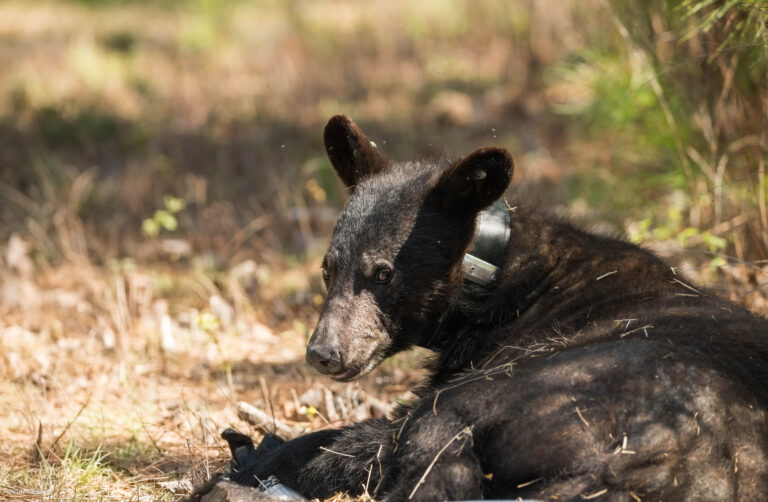
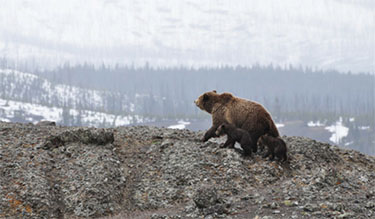
Bear Safety Tips keep you safe in bear country. Grizzly bears that have been habituated to human food sources can destroy private property, cause significant economic losses, and even cause public safety concerns. However, through cooperation among scientists, government agencies, NGOs and the public, human-bear conflict can be reduced, saving resources and protecting these valuable animals.
This month we’re lucky enough to feature the work of Dr. Andrea Morehouse who shares the conservation challenges and practical Bear Safety Tips found in Southwest Alberta.
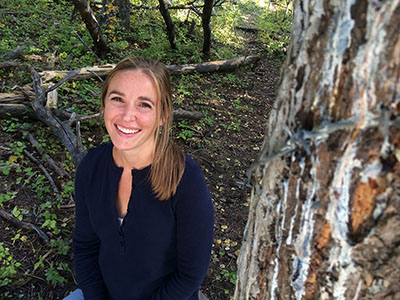
The mountains meet in the prairies in southwestern Alberta. Strong winds shape the landscape and the Rocky Mountains transition rapidly to agricultural lands resulting in spectacular scenery. Grizzly Bears and other large carnivores roam the landscape. The area is part of the Crown of the Continent, home to a UNESCO Biosphere Reserve, and arguably one of the most beautiful places in Alberta. For the past nine years, I have been lucky to call southwestern Alberta home.
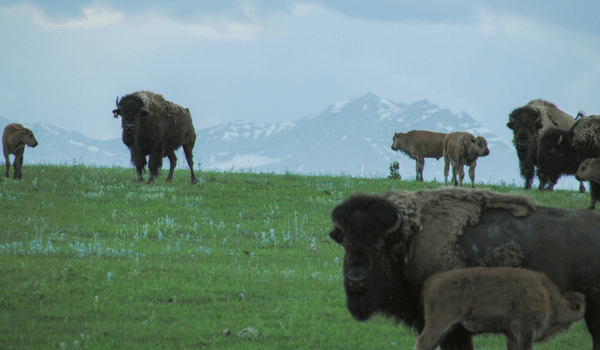
Coexisting with Large Carnivores in Southwestern Alberta
Unlike other areas of the province with extensive protected regions and large tracts of public land, southwestern Alberta has limited public lands. Within the 3,600 km² grizzly bear management area (BMA 6) that extends from Highway 3 south to the Montana border, only about 2,000 km² are public land. Simply put, this is not enough space to sustain viable populations of wide-ranging large carnivores. As a result, there is significant overlap between large carnivore home ranges and private land uses. Not surprisingly, southwestern Alberta continues to be a hotspot for large carnivore-agricultural conflicts, and bear safety remains an important topic.
“I feel fortunate to work with a community of proactive people willing to consider a landscape shared with carnivores.”
The region is home to all four native large carnivores—grizzly bears, black bears, wolves, and cougars—and it was research on these species that brought me to the area. My experience in southwestern Alberta began as an M.Sc. student at the University of Alberta studying wolf diet. I later completed a Ph.D. at the same university focused on grizzly bear population ecology and large carnivore conflicts in the region.
The Challenge of Living with Carnivores
Depredation of livestock by large carnivores is a long-standing issue, with wolves being the primary culprit. During the summer grazing season, approximately 45% of a wolf’s diet consists of domestic cattle. Grizzly bears also kill livestock and are responsible for the second-highest number of livestock depredation events in Alberta.
Southwestern Alberta has one of the highest grizzly bear densities in the province. Resident grizzly bear density in BMA 6 is 20.4 grizzly bears per 1,000 km² in the Recovery Zone (western public lands) and 17.1 grizzly bears per 1,000 km² in the Support Zone (eastern private lands). Each year, approximately 172 grizzly bears use the area.
Because of their omnivorous diet, grizzly bears cause more problems than just livestock depredation. Access to attractants often creates conflicts between people and bears. Bears may damage standing crops, stored silage, and grain; destroy grain bins; raid gardens, fruit trees, and garbage; and pose safety issues when near homes or communities. Understandably, these conflicts are a major concern for residents living within carnivore home ranges.
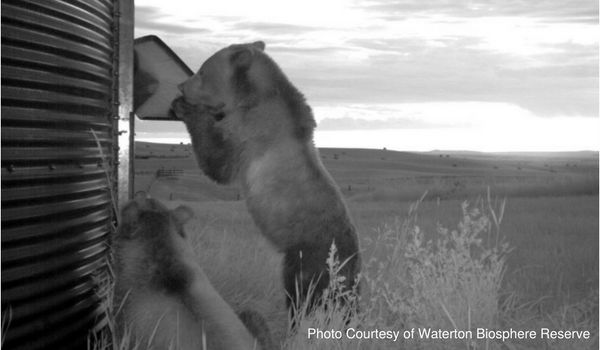
IMAGE: BEAR SAFETY TIPS FROM WATERTON
ollaborative Solutions and Community Action
Preventing negative interactions with large carnivores requires localized solutions. There is no “one size fits all” approach to mitigating human-carnivore conflicts—each situation must be place-based and tailored to those affected.
I feel fortunate to work with a proactive community willing to share the landscape with carnivores. Building on previous work led by groups such as the Drywood Yarrow Conservation Partnership, the Chief Mountain Landowner Initiative, and Montana’s Blackfoot Challenge, as well as partnerships with the provincial government, the Waterton Biosphere Reserve’s (WBR) Carnivores and Communities Program began in 2009 in response to rising conflicts between large carnivores and agriculture. I became involved with WBR in 2011 and joined its board of directors in 2014.
“We operate on a consensus-based model and together have made tremendous strides in reducing agricultural conflicts with large carnivores.”
The Carnivores and Communities Program is led by the Carnivore Working Group (CWG), which includes landowners and producers from Cardston County and the Municipalities of Pincher Creek, Ranchland, and Willow Creek, along with representatives from the provincial government, non-profit organizations such as the Nature Conservancy of Canada, and researchers like myself. The CWG operates on a consensus-based model, and together we have made tremendous progress in reducing agricultural conflicts with large carnivores in the region.
Reducing Attractants: Practical Tools for Coexistence
Much of the WBR CWG’s work focuses on limiting grizzly bear access to agricultural attractants. Our research shows that grain and dead livestock are the two most common attractants in southwestern Alberta.
Upgrading grain bins with bear-proof doors, hopper-bottom bins, and cement floors has helped prevent grizzly bear access. Sea cans, or shipping containers, are also used successfully to store grain and other attractants.
Additionally, electric fencing has proven to be one of the most effective tools for preventing grizzly bear access to grain, silage, bee yards, and calving pastures. Deadstock, or boneyards, are major attractants for all large carnivores, potentially drawing them close to other farm resources. The WBR’s deadstock removal program tackles this issue through on-farm pickup or bear-proof collection bins, which allow producers to safely dispose of carcasses and remove attractants from their property.
“Electric fencing has been a powerful tool in preventing grizzly bear access to a wide variety of attractants.”
Looking Ahead
The relationship between large carnivores and people in southwestern Alberta is complex. Mitigating conflicts and improving bear safety begins with strong working relationships among all stakeholders.
While several factors influence bear incidents, the number of conflicts involving grizzly bears in southwestern Alberta decreased noticeably in 2015 for the first time since 2006. Although much work remains, I believe the southwestern Alberta community has emerged as a leader in wildlife conservation and management. I am encouraged by our progress and confident that people and wildlife can continue to share this remarkable landscape.
Learn More About Bear Safety Tips at our Bear Safety HUB